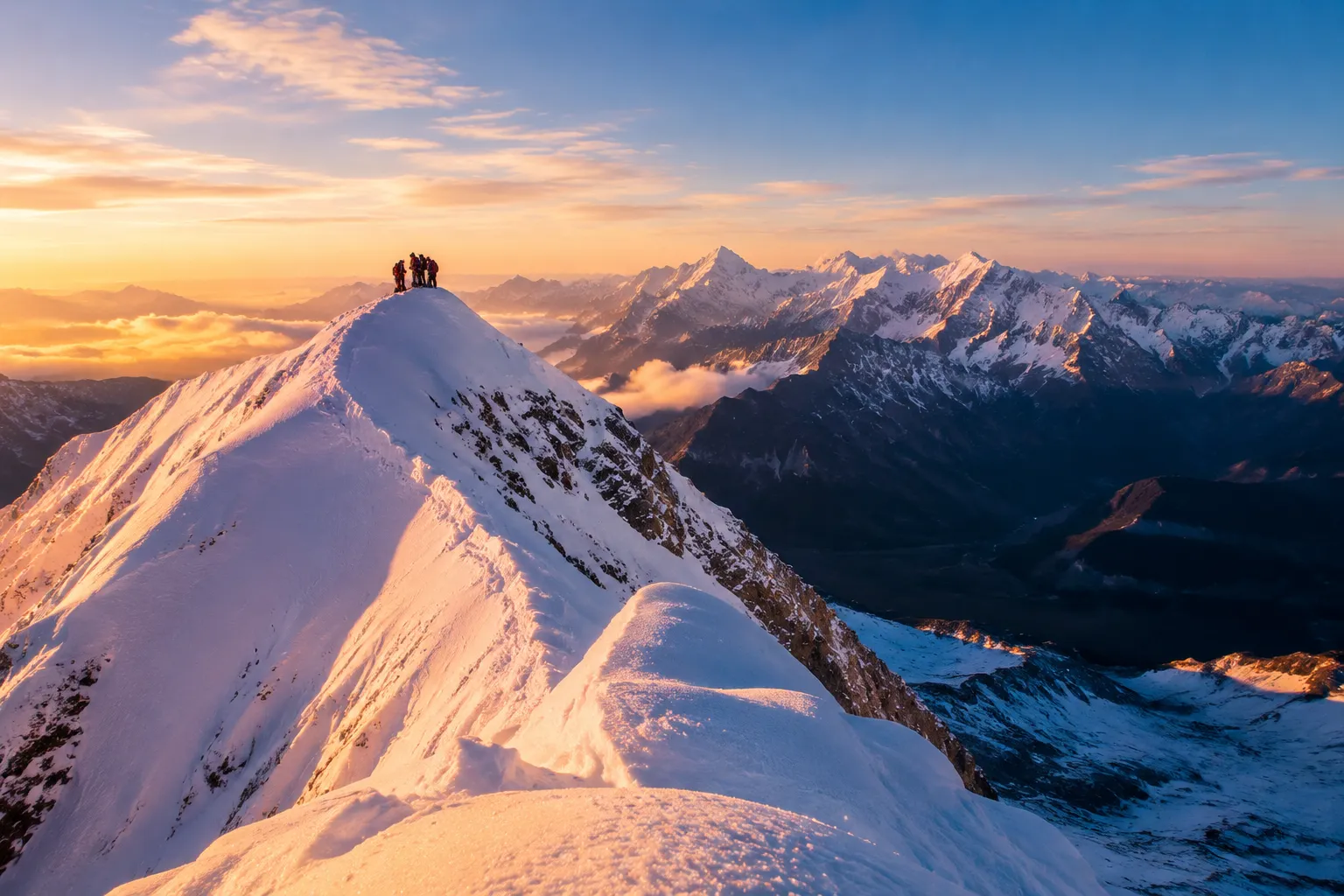
Haba Snow Mountain
At 5,396 meters, Haba Snow Mountain (哈巴雪山) is one of the most accessible 5,000-meter peaks in China. With no technical rock ice steps on the standard route, a fit beginner with a licensed guide can stand on the summit in two days. On a clear morning the view takes in Jade Dragon Snow Mountain, the full Tiger Leaping Gorge, and on exceptional days all the way to Meili Snow Mountain.
Why Climb Haba?
Most 5,000-meter peaks demand technical mountaineering. Haba's standard route is essentially a high-altitude hike: a steady trail from Haba Village (2,600 m) through forest to Base Camp (4,200 m), then a snow slope push to the summit. The only real challenges are altitude and stamina, not climbing skill. That makes it the classic first-timer's 5er in China, and a natural extension of a Shangri-La or Lijiang trip.
The mountain sits on the west bank of Jinsha River, directly across from Tiger Leaping Gorge. Many trekkers combine the two: two days on the gorge trail, then two days on Haba, sharing the same acclimatization window. Locals consider Haba a sacred mountain; its name means "flower mountain" in the local Naxi tradition.
The Standard 2-Day Climb
Day 1: Haba Village to Base Camp (4,200 m)
A 5–7 hour hike of roughly 10 km with 1,600 m of gain, climbing through birch and rhododendron forest. Mules can carry gear partway for an extra fee. Base Camp has simple guesthouse huts with bunk beds and hot meals — sleep early, hydrate heavily, and expect some headache nights.
Day 2: Summit Push and Descent
Depart 3:00–4:00 AM by headlamp. the snow-slope section takes 4–6 hours to the summit at 5,396 m, with the infamous "Despair Slope" just below the top. Summit for sunrise over Jade Dragon Snow Mountain, then descend to Base Camp by lunch and continue to the village the same evening — a 10–14 hour day.
Guides, Gear and Cost
- → Climb with a qualified local guide or licensed operator. Permits and checkpoint controls apply on the summit section; independent attempts are turned back. Haba Village guesthouses and Lijiang agencies both arrange guided climbs.
- → 2-day package climbs (guide, Base Camp lodging, mule for gear, crampons and ice-axe rental) are the norm and are priced per person per season — request quotes from two or three licensed operators and compare what gear is included.
- → Gear you must bring yourself: broken-in hiking boots (or rent at base), rain shell, down layer, gloves, sun glasses (cat-3 or darker), headlamp, and 1L+ water capacity. Rent crampons and the rest locally.
- → Acclimatize first. Spend 2–3 days at Shangri-La (3,300 m) or the gorge trail before attempting the climb. Do not arrive from a low-altitude city the day before.
Best Season
April–June is the most popular window: stable weather and clear summit views. Operators also run climbs November–February for experienced cold-weather hikers — expect firm snow and wind chill well below freezing at the top. July–August brings rain, leeches in the forest section, and frequent cloud cover that hides the summit; most operators pause climbs in peak monsoon.
Getting there: Haba Village sits across the Jinsha River from Tiger Leaping Gorge — most climbers start from Lijiang on an operator package with road transfer included, or join from Shangri-La on the same circuit.
Related Attractions »