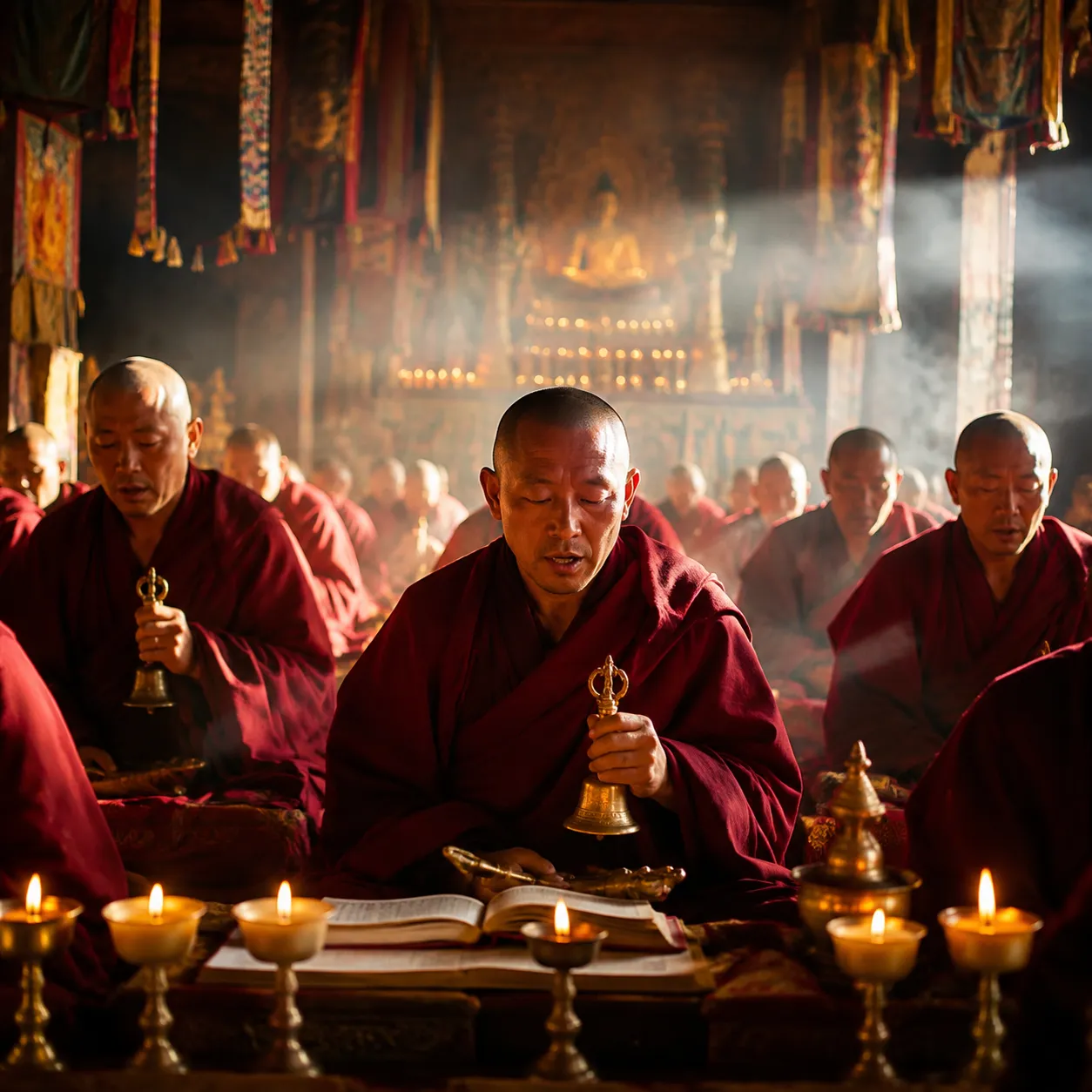
Morning Chanting at Songzanlin Monastery
The most profound cultural experience in Shangri-La. At 6:30 AM, 700 monks gather in the candlelit main hall. Tibetan horns, cymbals, and deep-throat chanting echo through the darkness. Visitors are welcome.
What Is Morning Chanting?
Morning chanting (morning puja) is a daily religious ceremony practiced in Tibetan Buddhist monasteries worldwide. At Songzanlin Monastery in Shangri-La, the ceremony takes place every morning at 6:30 AM in the main assembly hall (Tsokchen). Approximately 700 monks participate, though attendance varies with festivals and monastic schedules.
The ceremony begins in near-darkness, the hall lit only by hundreds of yak butter lamps flickering on the altar. Monks enter in silence, take their assigned seats on long red cushions arranged in rows, and wrap themselves in their traditional maroon robes. A senior lama leads the chanting, and the monks join in a deep, resonant, multi-tonal recitation of Buddhist sutras in classical Tibetan.
The sound is indescribable. The combination of 700 male voices chanting in unison, punctuated by the blast of Tibetan long horns (dungchen), the clash of cymbals (rolmo), and the rhythmic beat of drums creates an acoustic experience that vibrates through your chest. The chant melodies shift between meditative drones and rapid, rhythmic passages that build in intensity. It is not a performance — it is a deeply sacred act of devotion that has been performed in this exact manner for centuries.
How to Plan Your Visit
Timing
The ceremony starts at 6:30 AM and lasts approximately 1.5–2 hours. You do not need to stay for the entire duration — most visitors observe for 30–45 minutes. Arrive 10–15 minutes early to find a good observation spot. The monastery gates are open by 6:00 AM.
Getting There at Dawn
Public buses do not run at 6 AM. Options: walk from Dukezong Old Town (40 minutes, safe, follow the main road north), or arrange a taxi through your hotel the night before (20–30 RMB). Taxi drivers in Shangri-La are familiar with the morning chanting schedule and will arrange pickup.
What to Bring
Warm clothing — the monastery at 3,300m is cold at dawn (0–8u00b0C even in summer). A headlamp or phone flashlight for the walk there. Small RMB notes (10–20 RMB) for the donation box. Do not bring large bags or tripods — move quietly and travel light.
Etiquette & Rules
- → Dress modestly. Cover shoulders and knees. Remove your hat before entering the hall. Shoes must be removed at the entrance.
- → No flash photography. No photography at all during certain parts of the ceremony. Observe what others are doing. If in doubt, put the camera away and simply be present.
- → Silence your phone. Even vibration mode is disruptive. Turn it off completely.
- → Walk clockwise around the hall perimeter. Do not walk through the center aisle where monks process.
- → Do not point your feet at the Buddha statues, monks, or the altar.
- → Observe from the sides or back of the hall. The front rows and center are reserved for monks.
- → Do not touch monks' robes, cushions, or ritual instruments.
After the Ceremony
Once you leave the main hall, explore the monastery grounds. The morning light on the golden roofs is spectacular. Monks will be walking between halls, some heading to breakfast. The small tea house near the monastery exit opens around 7:30 AM — the perfect place to warm up with yak butter tea (10 RMB) and reflect on the experience. The monastery's other halls (colleges of Buddhist philosophy, medicine, and tantra) open to visitors from 8:00 AM. The combination of morning chanting + monastery exploration makes for an unforgettable half-day.
Why This Matters
In an age of Instagram tourism and bucket-list travel, morning chanting at Songzanlin offers something rare: a chance to witness a living spiritual tradition unchanged by modernity. No tickets are checked at dawn. No guides herd you through. You simply show up, be respectful, and share a space with 700 monks doing what they have done every morning for over 340 years. It may be the most meaningful hour of your trip to Shangri-La.
Related Food & Culture »