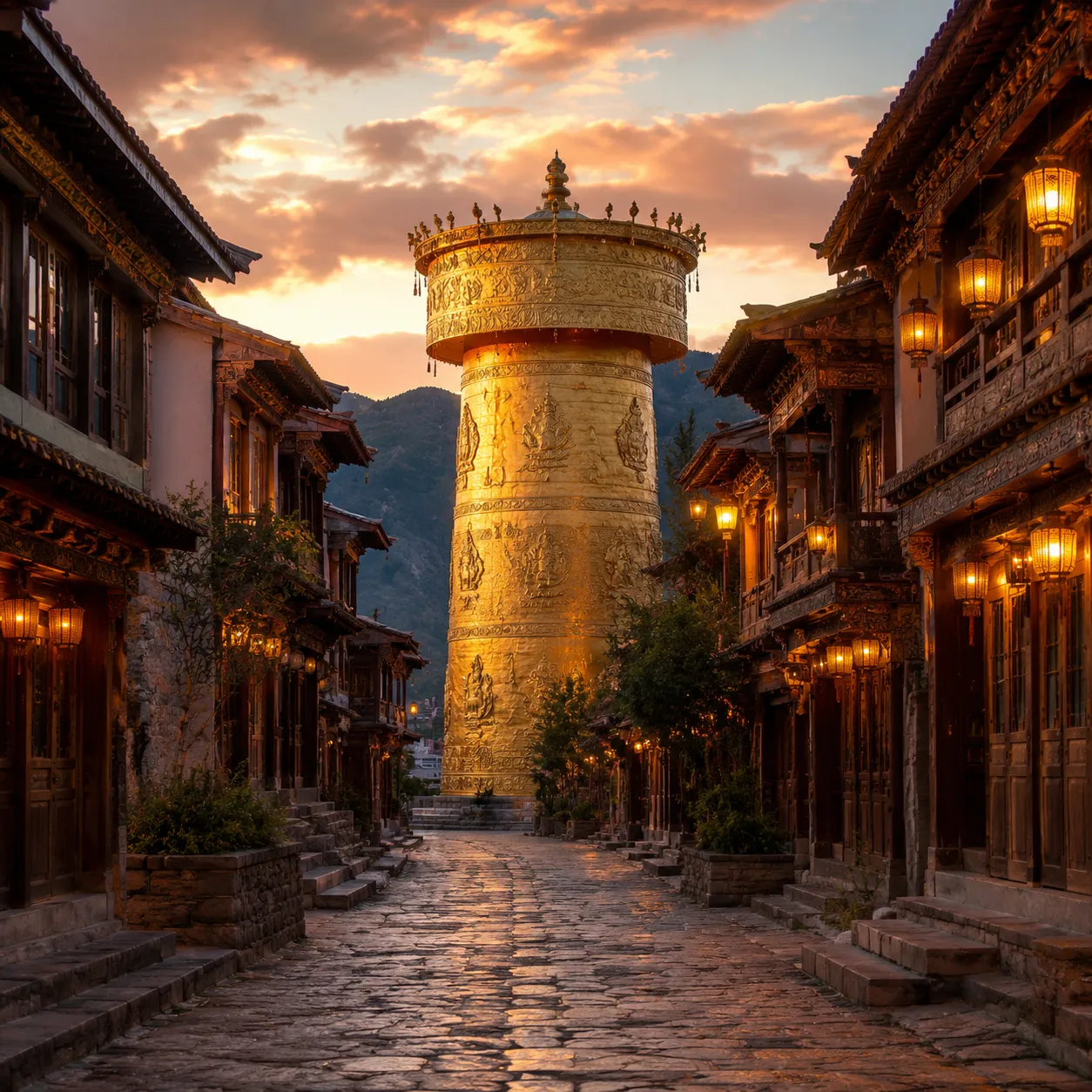
Dukezong Old Town
A 1,300-year-old Tibetan quarter. Cobblestone lanes lit by lanterns, the worldu2019s largest prayer wheel, and the beating heart of Shangri-La after dark.
Overview
Dukezong (u72ecu514bu5b97) means "Moon City" in Tibetan. Founded during the Tang Dynasty over 1,300 years ago, it was once a crucial stop on the Ancient Tea Horse Road connecting Yunnan to Tibet and beyond. Traders carrying tea, horses, salt, and silk rested here before crossing the high Himalayan passes.
In January 2014, a devastating fire destroyed roughly two-thirds of the old town. The reconstruction that followed preserved the traditional Tibetan architectural style while upgrading infrastructure. Today, Dukezong blends ancient character with modern comfort — cafes, guesthouses, art galleries, and handicraft shops fill the restored white-plastered buildings along narrow cobblestone lanes.
The town's centerpiece is the Guishan Park (Turtle Hill) crowned by the world's largest prayer wheel. Standing 21 meters tall and weighing 60 tons, the wheel is covered in gold foil and requires 10–15 people to turn. Locals circle it for good fortune. At the base of the hill, Sifang Street square becomes the social hub each evening as tourists and locals mingle, take photos in rented Tibetan costumes, and watch street performers.
How to Get There
Dukezong Old Town is in the heart of Shangri-La city. If you're staying in the old town (recommended), you're already there. From the new town area: a 10-minute taxi costs 8–15 RMB. From the airport: 20 minutes by taxi, 30–40 RMB. Bus No. 1 and No. 3 connect the old town to other parts of the city.
Where to Stay in Dukezong
Staying inside the old town is the best way to experience Shangri-La. Tibetan-style courtyard guesthouses (200–500 RMB/night) offer wooden-beamed rooms, Tibetan breakfast, and rooftop views of the prayer wheel. Budget traveler hostels start at 60 RMB for a dorm bed. Luxury boutique hotels like Songtsam Lodge (1,500+ RMB) provide an elevated experience in traditional architecture.
Where to Eat & Shop
Sifang Street and the lanes radiating from it are lined with Tibetan restaurants, yak hotpot joints, and cafes. Expect yak butter tea at 10–15 RMB, a bowl of Tibetan noodles at 15–25 RMB, and a full yak hotpot for two at 120–200 RMB. For souvenirs: thangka paintings (100–500 RMB), handmade Tibetan knives (80–300 RMB), yak wool scarves (50–150 RMB), and prayer beads (20–100 RMB) are widely available. The morning market near the east gate sells local produce, dried yak meat, and matsutake mushrooms in season.
Best Time to Visit
Dusk. The old town is most magical between 6:00 PM and 9:00 PM when lanterns flicker on along the lanes and the prayer wheel lights up in gold. The square fills with locals dancing traditional Tibetan circle dances (guozhuang) — visitors are welcome to join. Morning hours (7:00–9:00 AM) offer a completely different atmosphere: quiet lanes, monks walking to the monastery, and the smell of yak butter tea drifting from tea houses.
The Prayer Wheel Ritual
The giant prayer wheel at Guishan Park is the most photographed landmark in Shangri-La. Tibetan Buddhists believe that spinning a prayer wheel releases the mantras inside, spreading compassion and blessings. Tradition dictates spinning it an odd number of times: 3 for blessing, 7 for merit, or 108 for the most auspicious outcome. The panoramic view of Shangri-La city and the surrounding mountains from the hilltop is spectacular at sunset.